Home › FAQ Hub › Why does personalization vary across distribution channels?
AI, Data & AnalyticsWhy does personalization vary across distribution channels?
Personalization varies across distribution channels because each channel has a different kind of interaction and a different depth of data. Digital channels rely on behavioural and transactional data streams and can personalise in real time.
The same customer can receive a highly tailored offer in an app, a generic letter by post and a thoughtful recommendation from an adviser, all from the same institution in the same month. That inconsistency is not only a failure of coordination; it reflects real differences between channels.
Personalization varies across distribution channels because each channel has a different kind of interaction and a different depth of data. Digital channels rely on behavioural and transactional data streams and can personalise in real time. Branches personalise through relationship history and conversation. Brokers personalise around coverage gaps and risk; advisers through suitability assessments, goals and risk appetite.
Rules also differ. Automated, data-driven decisions face specific legal limits, while advice must meet suitability standards. The result is that personalization in each of the distribution channels uses different inputs, takes a different form and needs different governance, and the best institutions connect them rather than forcing them to look the same.
The core tension, in one line:
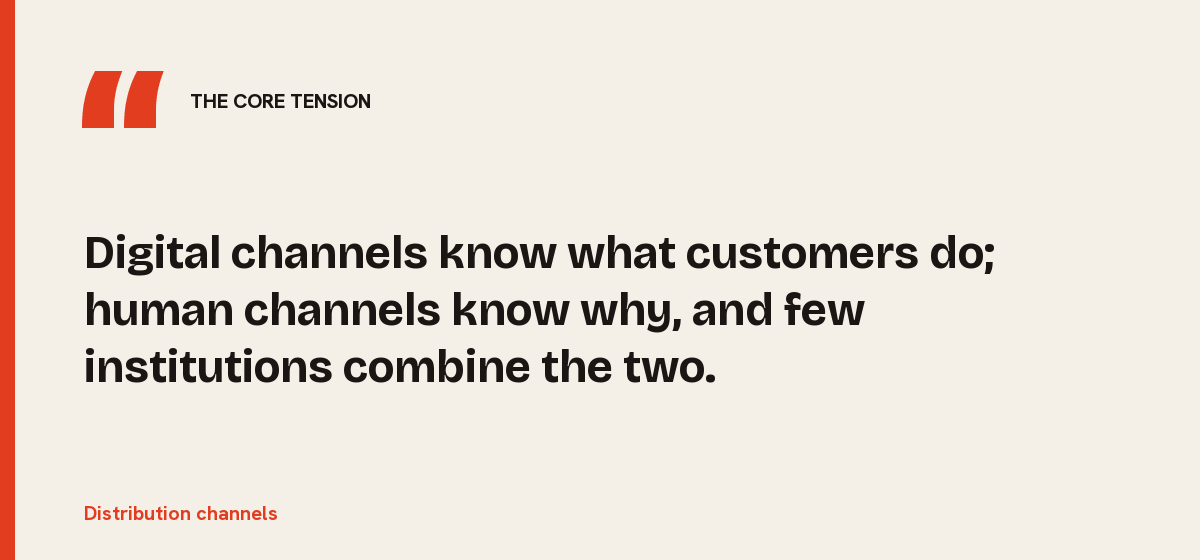
Digital channels know what customers do; human channels know why, and few institutions combine the two.
a bank’s app recommended a savings product based on spending patterns, while the customer’s adviser was discussing a pension transfer. The two messages conflicted. After connecting app signals to the adviser’s view and adviser notes to the app, recommendations became consistent and the customer received one coherent plan.
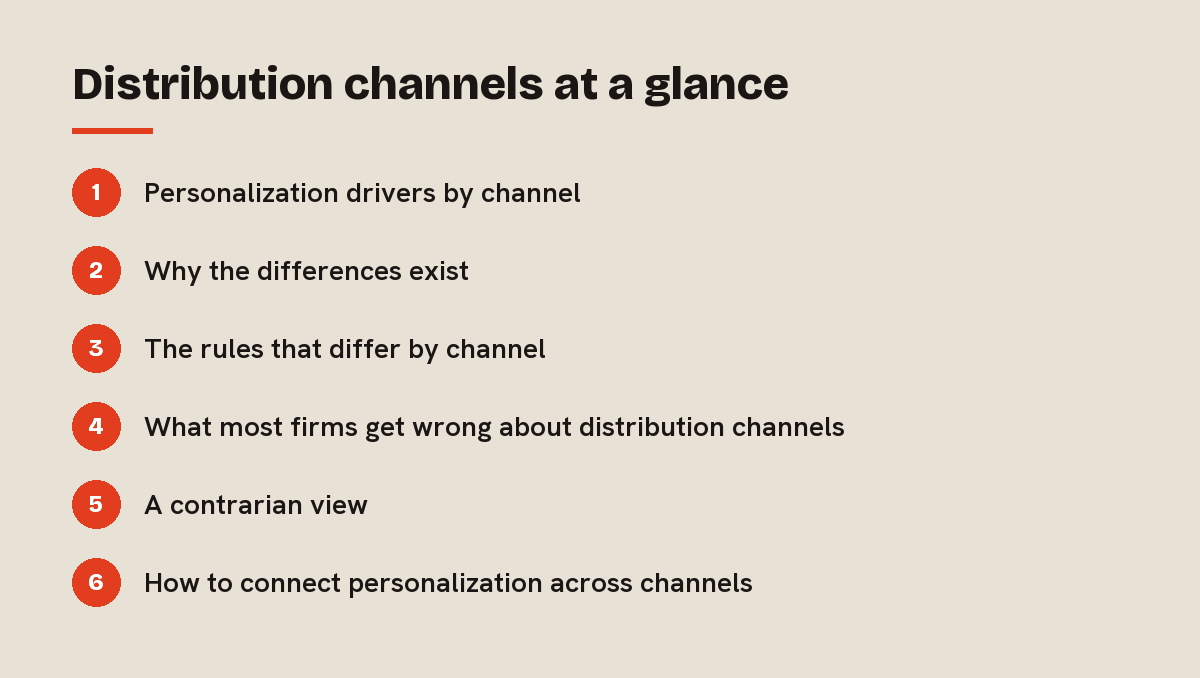
1. Personalization drivers by channel
| Channel | Main personalization driver | Typical output |
|---|---|---|
| Direct digital | Behavioural and transactional data | Real-time offers, prompts, insights |
| Branch | Relationship history and stated needs | Conversations and tailored proposals |
| Broker | Coverage gaps and risk profile | Recommended cover and limits |
| Adviser | Suitability, goals, risk appetite | Personal advice and portfolios |
| Embedded | Context of the partner transaction | Offers at the moment of need |
2. Why the differences exist
- Data richness: digital channels capture behaviour continuously; human channels capture context and intent.
- Interaction frequency: daily app use allows constant tailoring; advice meetings are periodic.
- Regulation: advice must be suitable; automated decisions face limits on profiling.
- Ownership: brokers and partners may hold data the institution cannot see.
3. The rules that differ by channel
Automated personalization based on profiling faces specific constraints. Under the EU’s Artificial Intelligence Act, AI used to assess creditworthiness and for life and health insurance pricing is high-risk, with requirements on oversight and documentation. In the UK, the FCA’s Consumer Duty asks firms to consider customers’ needs and behaviour at every stage, whatever the channel. In insurance, EIOPA found that digital-only distribution still lags behind physical or hybrid channels, so much personalization still happens through intermediaries.
| Channel | Main governance focus |
|---|---|
| Direct digital | Profiling limits, fairness, explainability |
| Adviser | Suitability and records |
| Broker | Demands and needs, intermediary oversight |
| Embedded | Partner controls and disclosure |
4. What most firms get wrong about distribution channels
- Personalising in silos: each channel optimises its own messages without a shared view.
- Copying digital tactics into advice: behavioural nudges are not a substitute for suitability.
- Ignoring human insight: advisers’ and brokers’ knowledge rarely flows back into digital models.
- Applying one governance standard: different distribution channels need different controls.
Example: an insurer’s direct channel offered home insurance upgrades based on claims data, while brokers recommended different cover for the same customers. A shared customer view and agreed rules for which channel leads which decision removed contradictory offers and improved retention in both distribution channels.
5. A contrarian view
Consistency across channels is usually treated as the goal. A better goal is coherence: each channel personalises in the way it does best, but they draw on shared data and do not contradict each other. Forcing every channel to personalise the same way loses what makes each valuable.
6. How to connect personalization across channels
- Build a shared customer view accessible to all channels.
- Agree which channel leads each type of decision.
- Feed human insight back into digital models, with consent.
- Govern each channel according to its rules and risks.
Key takeaways on distribution channels
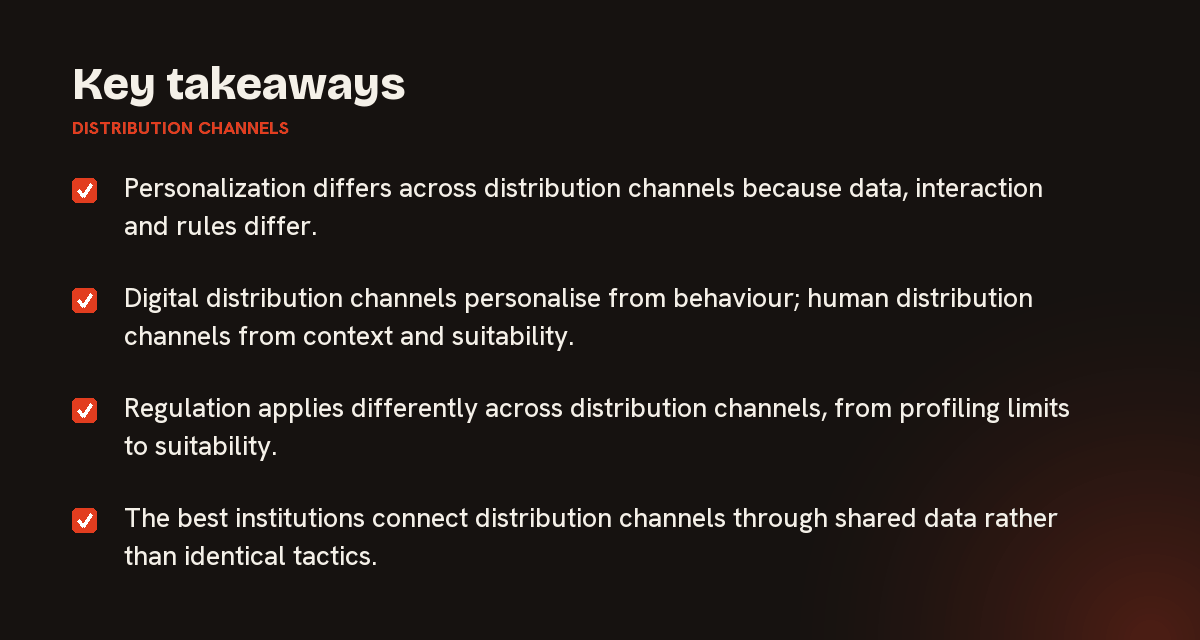
- Personalization differs across distribution channels because data, interaction and rules differ.
- Digital distribution channels personalise from behaviour; human distribution channels from context and suitability.
- Regulation applies differently across distribution channels, from profiling limits to suitability.
- The best institutions connect distribution channels through shared data rather than identical tactics.
For leadership teams, the goal is not identical personalization everywhere but coherent personalization across distribution channels. Shared data, clear decision rights and channel-appropriate governance make that possible.
Optimizium helps banks, insurers and wealth managers connect personalization across digital and human channels. We respect the insight advisers, brokers and branch staff hold about customers. And we bring data protection, risk and compliance into the design as co-authors, so personalization is consistent, fair and well governed.
Explore how we approach this across Banking, Insurance and Wealth Management, browse the FAQ Hub, or read the related question: Why is “Omnichannel Distribution” critical for modern insurance providers?
Partner with the experts.
Let's discuss how Optimizium can accelerate your roadmap and navigate complex digital transformation.
Schedule a consultation →